


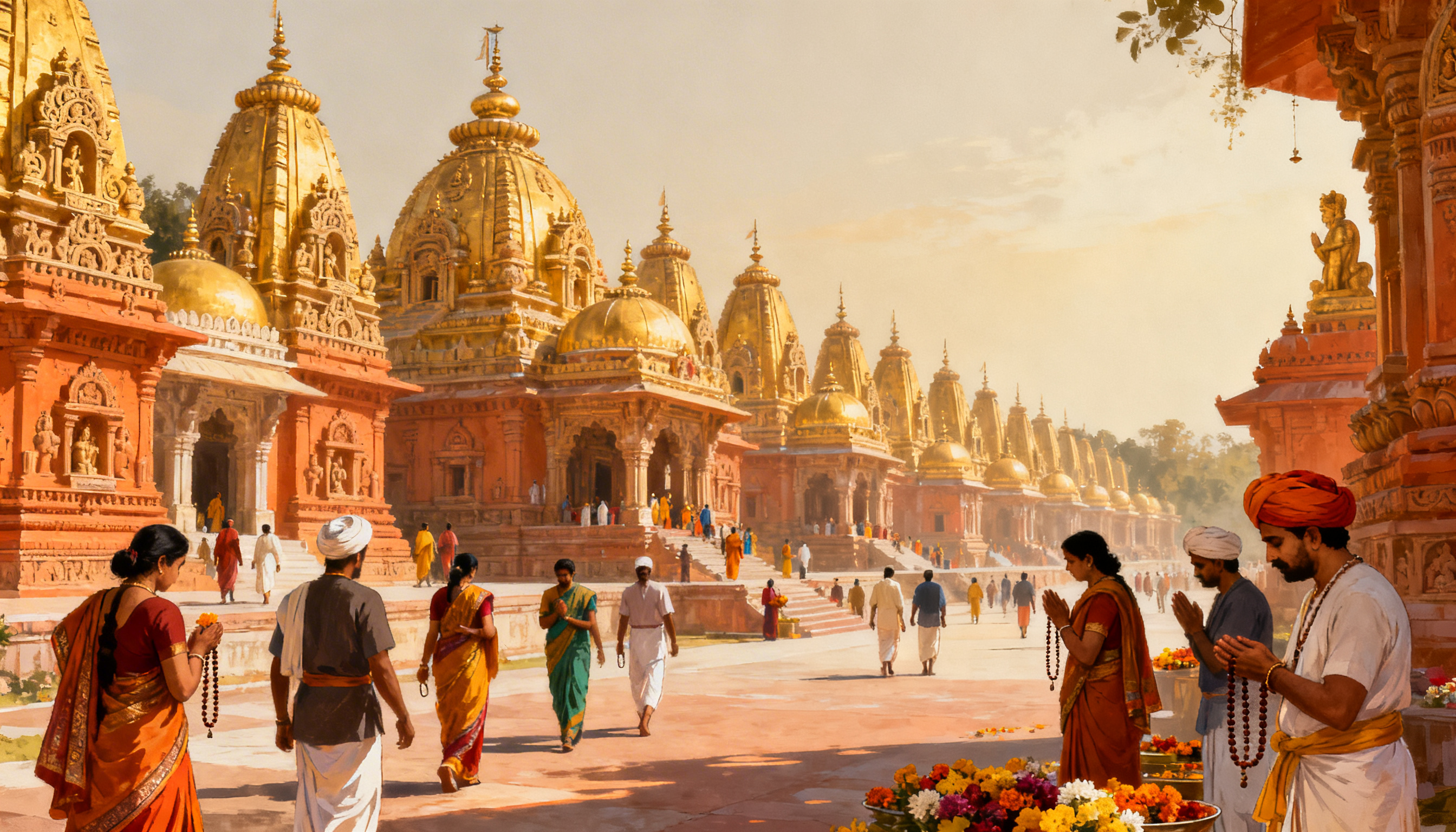
51 Shakti Peeth: Overview & Importance
“यत्र यत्र पतिते देव्याः अंगं तत्र तत्र शक्तिपीठम्।”
In Sanatan Dharma, 51 Shaktipeeths have a very sacred and divine place. These are the holy places where various body parts, jewelery or clothes of Mata Sati had fallen on earth. In every Shaktipeeth, the Goddess is present in a special form and a Bhairava (Shiva form) is also established along with her.
According to the Puranas, when King Daksha insulted Sati and Lord Shiva, Sati immolated herself in
the
Yagya Kund.
When Shiva, distressed by separation, started having an orgy with Sati's body, Lord Vishnu
disintegrated Sati's body with his Sudarshan Chakra.
Wherever his body parts fell, Shaktipeeths were established there.
Adi Shakti appears in various divine forms, such as:
- Mahalakshmi – Goddess of wealth and prosperity
- Mahasaraswati – Goddess of knowledge and wisdom
- Mahakali – Goddess of time, power, and transformation
Together, these three forms complete the Tridevi, governing the three cosmic qualities (gunas):
Sattva (purity), Rajas (activity), and Tamas (inertia).
These Shakti Peethas, situated across India and neighboring countries, represent the diverse manifestations of Goddess Shakti.
- Kamakhya Temple (Assam) – The spot where the Goddess's yoni (genital) fell; a major center for Tantric practices.
- Kalighat Temple (West Bengal) – Believed to be the site where one of the Goddess's toes fell.
- Jwalaji Temple (Himachal Pradesh) – The place where the Goddess's tongue fell; an eternal flame burns here continuously.
- Hinglaj Mata Temple (Balochistan) – The site where the Goddess's Brahmarandhra (crown of the head) fell.
- Vindhyavasini Devi Temple (Mirzapur) – A sacred and significant shrine dedicated to Mother Vindhyavasini.
- Naina Devi Temple (Himachal Pradesh) – The place where the Goddess's eyes fell.
- Chamunda Devi Temple (Himachal Pradesh) – A shrine where the form of Goddess Chamunda is worshipped.
- Ambaji Temple (Gujarat) – Believed to be the site where the Goddess's heart fell.
The Shakti Peethas are not merely pilgrimage sites but powerful centers of divine feminine energy. Each Peeth radiates the living presence of the Goddess, awakening devotion, inner strength, and spiritual transformation in the devotee. Worship at these sacred seats is believed to dissolve obstacles, purify the mind, and bless the seeker with courage, wisdom, and liberation.
Undertaking the Shaktipeeth pilgrimage is regarded as one of the most sacred journeys in the Hindu tradition. Travelling from one Peeth to another, the devotee experiences the diverse forms of the Mother Goddess and connects with the cultural and spiritual heritage spread across the Indian subcontinent. The pilgrimage is said to grant divine grace, fulfilment of wishes, and protection from negative forces.
The 51 Shakti Peethas stand as eternal symbols of the supreme feminine power that sustains creation. They remind us that Shakti is the foundation of all existence — the energy behind every form, thought, and action. By honouring these sacred seats, devotees keep alive an ancient tradition of reverence for the Divine Mother and her boundless grace.
Trusted by Devotees
• Secure • Transparent • Sacred
Your contribution supports the creation, preservation, and daily सेवा of the sacred Shakti Dham.
Donate with faith. Serve with devotion.